
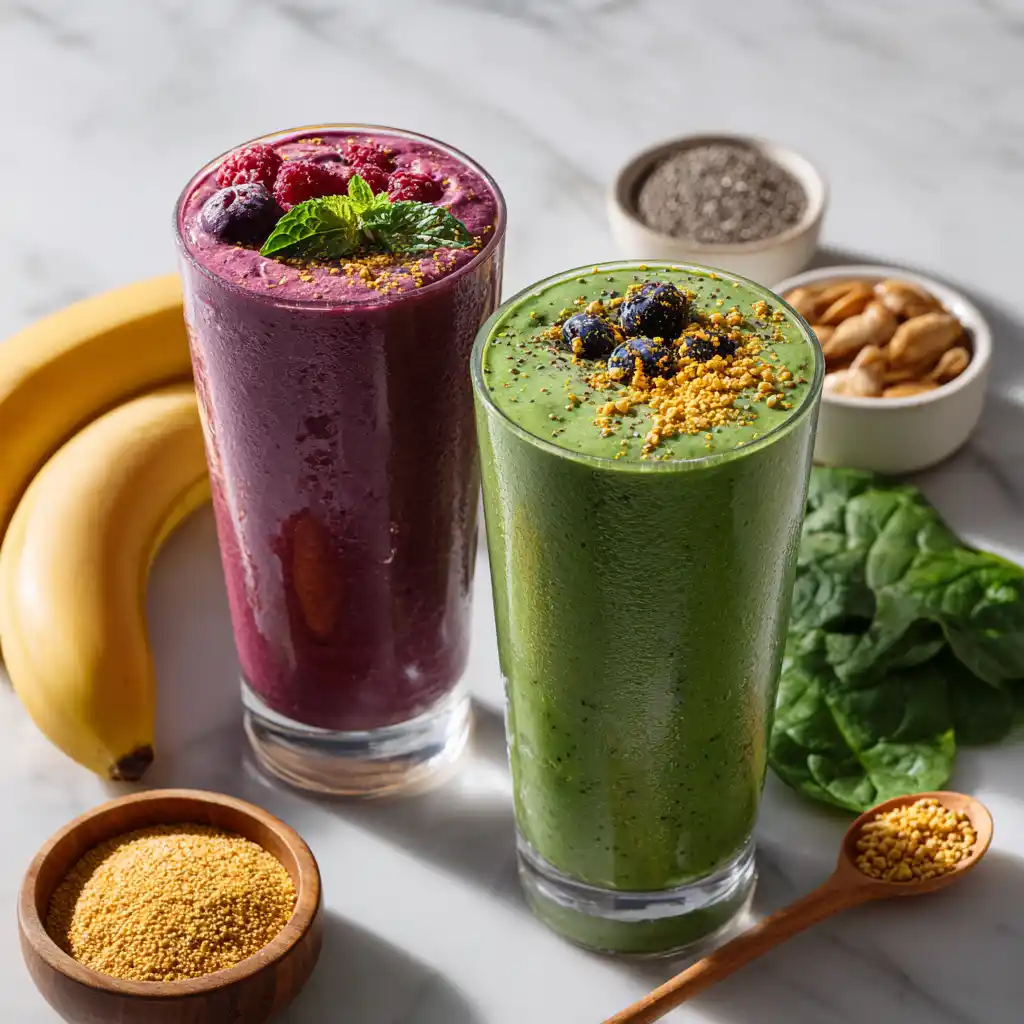
Looking for a simple way to fuel your body naturally? Adding bee pollen in smoothies is a smart, flavorful step. This golden superfood is packed with protein, B vitamins, and antioxidants, perfect for a morning or post-workout boost. Smoothies are already a go-to for quick nutrition, and bee pollen blends in seamlessly. If you enjoy nutrient-rich recipes like this acai blueberry smoothie, you’ll love what bee pollen brings to your blend. In this guide, you’ll learn the key benefits, tips, and recipes to use bee pollen with confidence.
Table of Contents
Why I Started Using Bee Pollen in Smoothies
The Curiosity That Sparked a Routine
It started on a chilly Saturday morning while browsing my local farmers’ market. Between fresh herbs and sourdough loaves, a vendor handed me a tiny spoon of golden grains and said, “Try this, it’s bee pollen.” I hesitated, but the nutty-sweet taste was surprisingly pleasant. That’s when I first learned about its rich nutritional profile.
Back home, I started blending it into my favorite green smoothies. The subtle flavor disappeared into the creamy blend, but what stayed was the feeling, sustained energy, fewer mid-morning crashes, and a noticeable glow to my skin. I wasn’t expecting magic, just something simple that felt good.
From Curiosity to Daily Ritual
After some research, I learned that bee pollen in smoothies isn’t just a trend, it’s been around in holistic health circles for years. High in protein, amino acids, and antioxidants, bee pollen offers an easy boost to any smoothie recipe. And because smoothies are already part of my daily routine, it was an effortless way to add it in.
Now, it’s a staple in my kitchen. Whether I’m blending a green detox smoothie or a creamy chocolate post-workout blend, bee pollen gives it an extra layer of nourishment. I recommend starting with just a sprinkle and seeing how your body responds. It’s a small change, but one that’s made a big difference in my day-to-day life.
Why Add Bee Pollen in Smoothies?
A Natural Energy Boost
When you add bee pollen in smoothies, you’re giving your body a steady, natural energy source. It’s rich in carbohydrates, protein, and B vitamins, key nutrients that help fuel your day without the crash of caffeine. A smoothie with bee pollen is a great way to power your morning or recharge after a workout. Many people notice more balanced energy levels and improved focus after making it a daily habit.
Bee pollen is also packed with antioxidants and anti-inflammatory compounds that help your body manage stress and stay resilient. Flavonoids and plant nutrients may support your immune system and reduce oxidative stress over time. It pairs especially well with other vibrant superfoods. Try combining it with ingredients like spirulina, just as in this blue spirulina smoothie, for a colorful, nutrient-dense blend.
Immune System Benefits
Bee pollen is full of antioxidants and anti-inflammatory nutrients that help your body handle stress and stay strong. Its wide range of nutrients has been confirmed by studies on the nutritional value of bee pollen published by the U.S. National Library of Medicine.
Better Skin from Within
Thanks to its mix of vitamins, minerals, and amino acids, bee pollen supports skin repair and health. Many people notice clearer, more radiant skin after adding bee pollen in smoothies consistently. It’s a small ingredient, but one that works behind the scenes to support a fresh, natural glow.
Helps Digestion and Gut Balance
Bee pollen comes with natural enzymes that support digestion. While not a replacement for probiotics, its enzyme content helps your body break down nutrients more effectively. For those who blend daily smoothies to support gut health, bee pollen fits right in.
May Ease Seasonal Allergies
Some use bee pollen in smoothies to manage seasonal allergies, especially when sourced locally. While results vary, it’s worth trying in small amounts. If you have allergies or sensitivities, always start with less and consult a health professional before regular use.
Essential Tips for Using Bee Pollen in Smoothies
How to Choose the Right Bee Pollen
Before adding bee pollen in smoothies, it’s important to select high-quality granules or powder. Both forms work well, but powders blend more smoothly. Look for products labeled raw, pure, and ideally sourced from local or organic farms. Freshness matters, good bee pollen should have a slightly sweet, floral scent and a vibrant color. Avoid overly processed varieties with additives.
If you’re new to this ingredient, start with a small batch from a trusted source. Smaller jars help you test freshness and flavor before buying in bulk.
How Much to Add in Smoothies
The amount of bee pollen in smoothies depends on your experience and your body’s response. For beginners, start with 1/2 teaspoon per serving. Over time, you can gradually increase to 1 or 2 teaspoons, depending on your comfort level. Some regular users even go up to 1 tablespoon, but always build slowly.
Because bee pollen is a natural product from bees, it can trigger allergic reactions in sensitive individuals. That’s why it’s smart to begin with tiny amounts and wait 24 hours before using again. If you have pollen allergies, consult a doctor first.
Best Time to Enjoy It
The best time to enjoy bee pollen in smoothies is in the morning, as part of breakfast or before a workout. Its nutrient-rich profile helps fuel your day and supports your energy naturally. Avoid taking it too late in the evening if you’re sensitive to stimulation.
Storage Tips for Freshness
To keep bee pollen potent, store it in a sealed glass jar in the fridge. You can also freeze it for long-term storage. Avoid exposing it to direct sunlight or heat. This helps maintain its flavor and nutrient value for every smoothie you make.
Delicious Bee Pollen Smoothie Recipes
Start Simple, Blend Often
Adding bee pollen in smoothies is one of the easiest ways to enjoy its benefits. Whether you’re craving something fruity, green, or indulgent, this golden ingredient blends right in. Here are two of my go-to recipes that are quick to make, nutrient-packed, and perfect for beginners.
The Berry Bee Pollen Smoothie
Berry Bee Pollen Smoothie

Ingredients
Main
- 1 cup water
- 1 small banana
- 2/3 cup frozen mixed berries
- 1 teaspoon bee pollen
- 1 tablespoon chia seeds
- 1 serving collagen or protein powder optional
- ice cubes for texture
Instructions
- Add all ingredients into a high-speed blender.
- Blend until smooth and creamy.
- Pour into a glass and enjoy immediately.
Notes
This refreshing blend combines antioxidants from berries with the superfood power of bee pollen. It’s light, energizing, and perfect for your morning start.
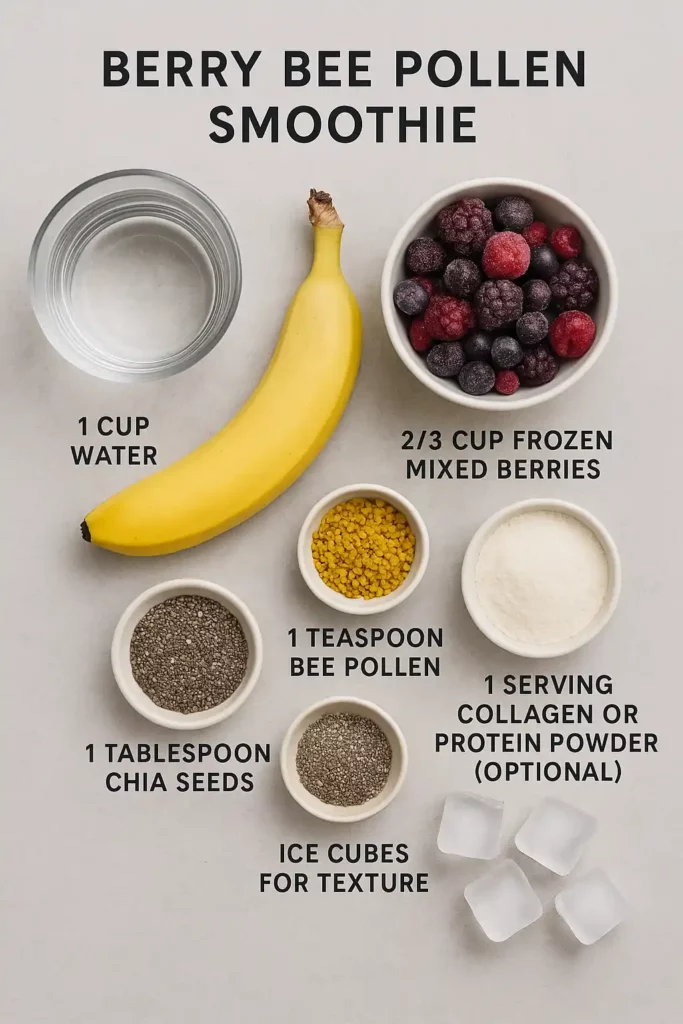
Ingredients:
- 1 cup of water
- 1 small banana
- 2/3 cup frozen mixed berries
- 1 teaspoon bee pollen
- 1 tablespoon chia seeds
- 1 serving collagen or protein powder (optional)
- Ice cubes for texture
Instructions:
- Add all ingredients to a blender.
- Blend until smooth and creamy.
- Pour and enjoy right away.
Prep Time: 5 minutes
Servings: 1
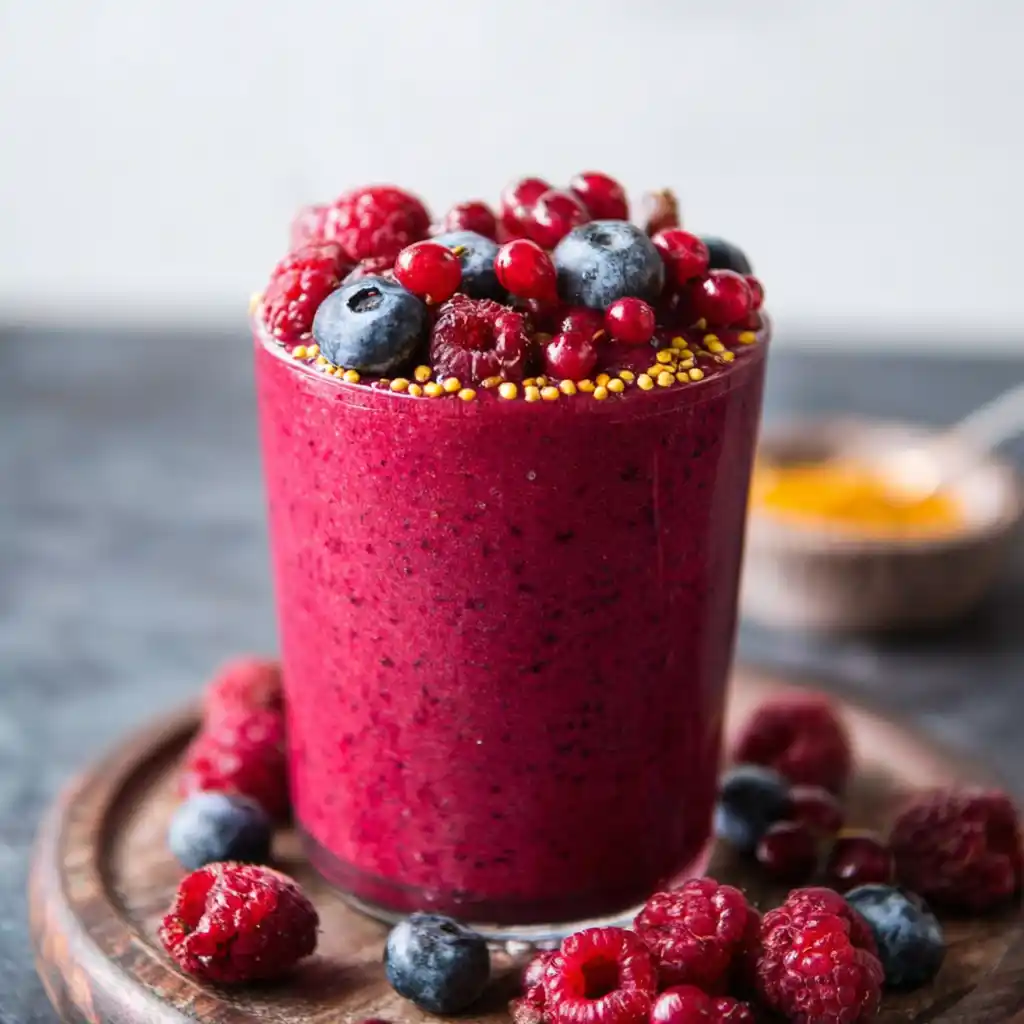
Green Protein Bee Pollen Smoothie
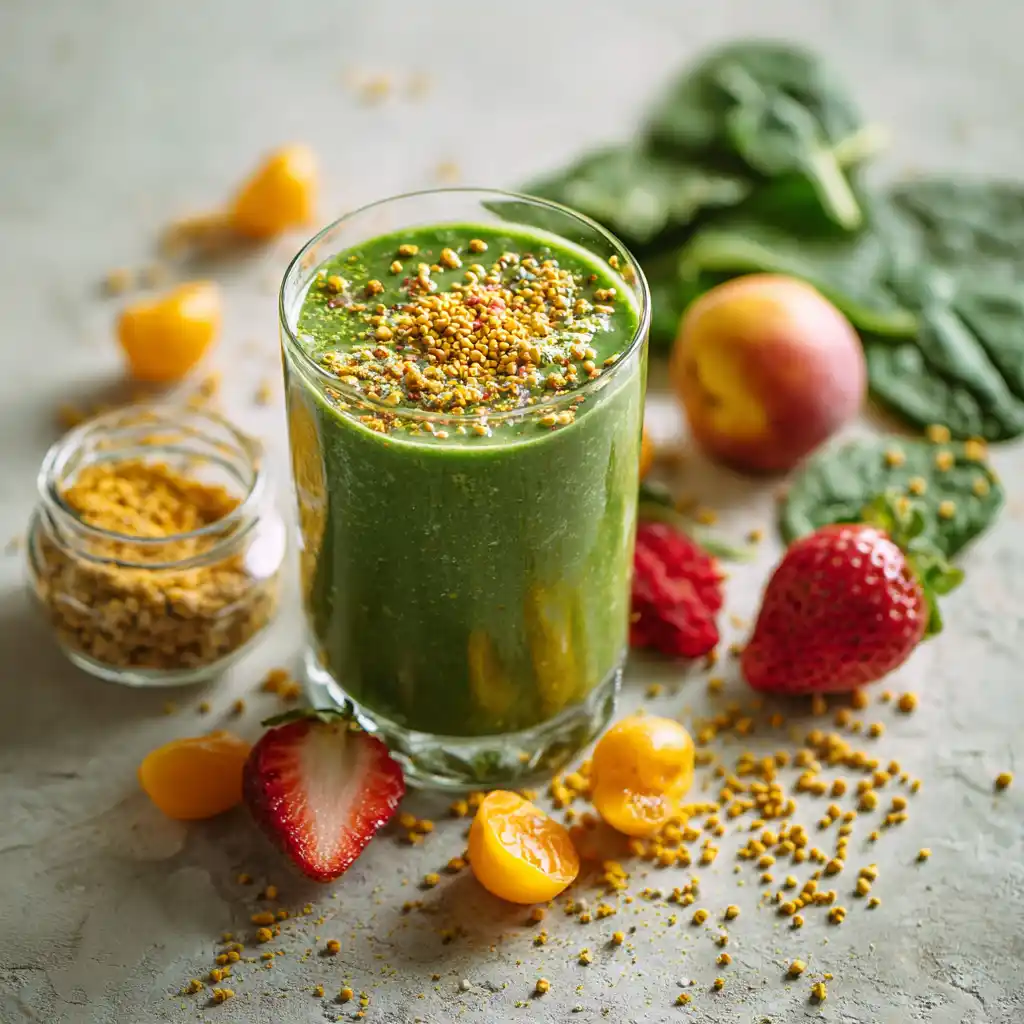
Green Protein Bee Pollen Smoothie
Ingredients
Main
- 0.5 tablespoon bee pollen powder start with 1/2 tbsp if it’s your first time
- 1 cup almond milk or any non-dairy milk
- 2 tablespoons peanut butter
- 1 serving protein powder your favorite type
- 1 cup fresh spinach
- ice cubes as needed
Instructions
- Combine all ingredients in a blender.
- Blend until fully smooth.
- Adjust ice for thickness and serve immediately.
Notes
For a more filling option, this smoothie includes healthy fats, plant-based protein, and leafy greens, all balanced with the mild sweetness of bee pollen in smoothies.
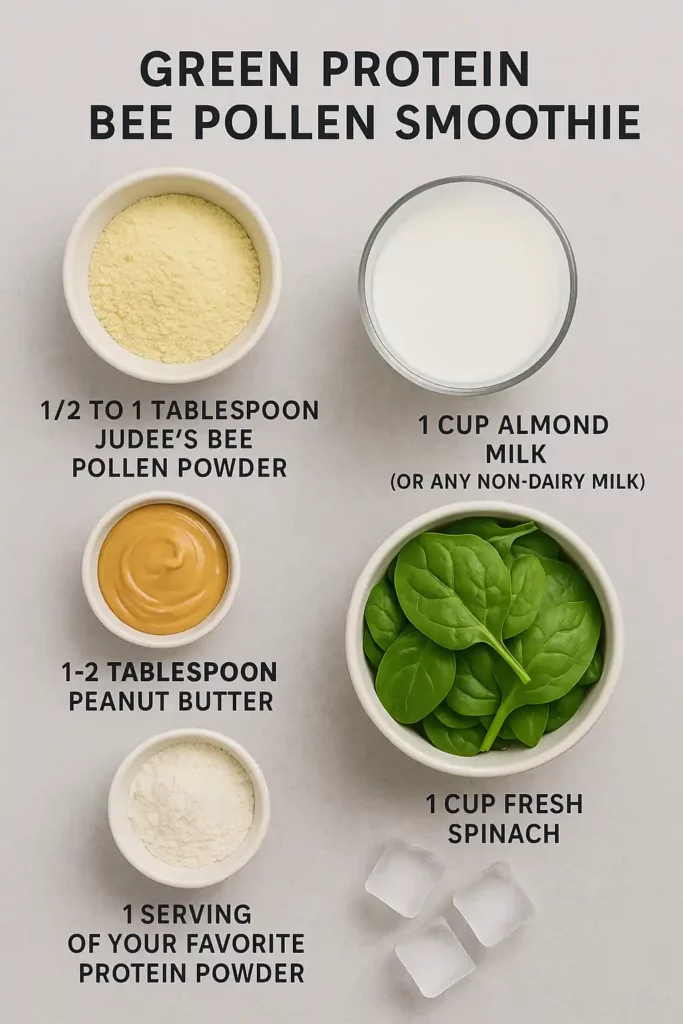
Ingredients:
- 1/2 to 1 tablespoon Judee’s Bee Pollen Powder
- 1 cup almond milk (or any non-dairy milk)
- 1–2 tablespoons peanut butter
- 1 serving of your favorite protein powder
- 1 cup fresh spinach
- Ice cubes as needed
Instructions:
- Add all ingredients to your blender.
- Blend until everything is fully combined.
- Adjust ice for desired thickness.
Prep Time: 5 minutes
Servings: 1
Note: Start with ½ tbsp of bee pollen if it’s your first time.
These recipes are perfect examples of how flexible and flavorful bee pollen in smoothies can be. You can switch up ingredients based on what you have at home and still get the nutritional boost. And if you’re ever in the mood for something indulgent instead, why not check out this fun s’mores milkshake, it’s a dessert drink that satisfies every craving.
Conclusion: Small Granules, Big Impact
Adding bee pollen in smoothies is one of the easiest ways to support your health with real food. From energy and immunity to digestion and skin, this tiny ingredient brings a lot to the table, without much effort. With the tips and recipes shared here, you can start small, experiment with flavors, and discover what works best for you.
Common Questions About Bee Pollen in Smoothies
Is bee pollen good for smoothies?
Yes, bee pollen is a nutrient-rich superfood that works well in smoothies. It blends smoothly and offers a subtle, earthy flavor. More importantly, it adds protein, B vitamins, antioxidants, and enzymes, making your smoothie more nourishing. If you enjoy smoothies as part of a daily routine, bee pollen is a smart addition.
Why do I feel weird after eating bee pollen?
Some people may experience mild reactions when first introducing bee pollen. This could include digestive discomfort or allergy-like symptoms. Because bee pollen comes from plants and flowers, it can trigger sensitivities, especially in those with seasonal allergies. Start with a small amount and observe how your body responds. If symptoms persist, stop using it and consult your doctor.
Is drinking bee pollen good for you?
Drinking smoothies with bee pollen is generally considered healthy for most people. It supports energy, immunity, and digestion. But as always, check reliable sources like Cleveland Clinic’s guidance on bee pollen safety, especially if you have allergies or health conditions.
What are the downsides of bee pollen?
While bee pollen has many benefits, there are a few risks. People with pollen allergies or bee-related sensitivities may react negatively. Overconsumption can also lead to nausea or mild digestive issues. Pregnant women and children should consult a healthcare provider before use. Always start small, store it properly, and choose a trusted source to reduce risks.