
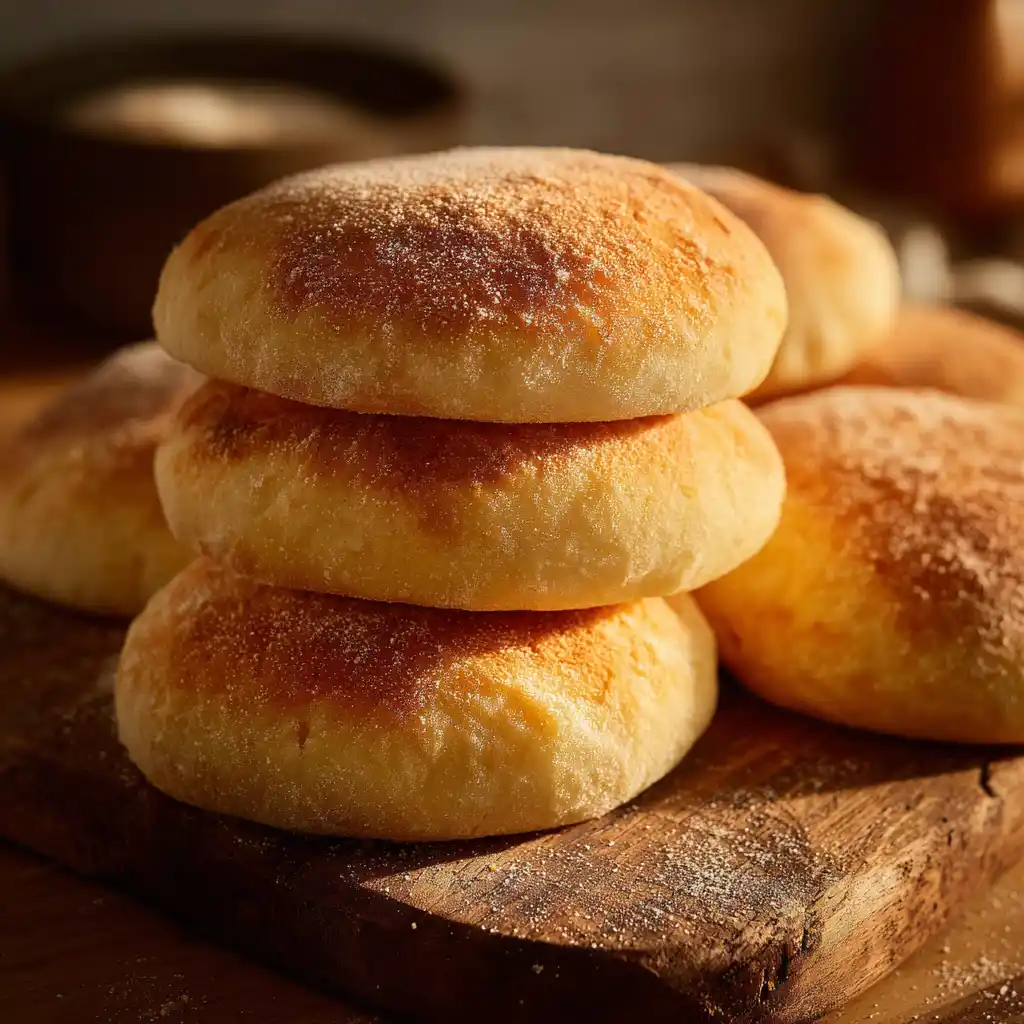
Making semolina bread always takes me back to weekends in my childhood kitchen. My grandmother would start early, mixing the golden semolina with warm water and yeast. By midday, the house filled with the comforting aroma of fresh bread sizzling on the pan. The sound of each puffing disc, rising like a balloon, was our favorite soundtrack growing up. It wasn’t just bread, it was a moment. This recipe brings back those memories every time I make it. The soft, slightly chewy texture, golden crust, and delicate semolina flavor make it irresistible. I love how this semolina bread turns an everyday meal into something special.
Table of Contents
Why You’ll Love This Semolina Bread Recipe
- Quick and easy: Just 1 hour of rising time and cooked in a pan, no oven needed.
- Minimal ingredients: Only pantry staples required.
- Soft and fluffy texture: The dough puffs up beautifully, like pita.
- Versatile: Perfect with soups, stews, or stuffed with savory fillings.
- Nostalgic flavor: Semolina adds a slight nuttiness and depth you won’t get from regular flour.
- Crowd-pleaser: Makes six beautiful rounds that impress every time.
Unlike typical pita or flatbread, this semolina bread combines the tender structure of semolina with a unique pan-cooked method. The result is a soft yet slightly crisp exterior with an airy interior, ideal for scooping, wrapping, or enjoying on its own.
Ingredients Needed
For the dough:
- 2 cups fine semolina flour – This gives the bread its signature texture and light golden color.
- 1 cup all-purpose flour – Balances the structure and softness of the dough.
- 1 tablespoon active dry yeast – Helps the dough rise and creates puffiness.
- 1 teaspoon sugar – Feeds the yeast and adds a subtle sweetness.
- 1 teaspoon salt – Essential for flavor.
- 1 ¼ cups warm water – Lukewarm to the touch (around 105°F) to activate the yeast.
- Extra fine semolina for dusting – Keeps the dough from sticking while adding a toasty finish during cooking.
These ingredients come together to form a pliable, fluffy dough that’s easy to shape and cooks beautifully in a dry pan.
How to Make Semolina Bread
- Combine dry ingredients
In a large mixing bowl, stir together the semolina, all-purpose flour, yeast, sugar, and salt. Make sure everything is evenly distributed before adding the liquid. - Mix in warm water gradually
Slowly pour in the warm water while mixing with your hand or a wooden spoon. You want a soft dough, not too sticky. Hold back some water if the dough feels too wet. - Knead the dough well
Knead for about 10 minutes by hand (or 5–7 minutes in a stand mixer with a dough hook) until the dough becomes smooth and stretchy. This builds gluten, which gives the bread its structure and puff. - Let the dough rise
Cover the bowl with a damp kitchen towel and let it sit in a warm spot for about 1 hour, or until doubled in size. It should look airy and slightly domed. - Shape the dough
Once risen, punch it down gently and divide it into six equal parts. Roll each piece into a ball and set aside for a few minutes to relax. - Flatten into discs
On a surface lightly dusted with fine semolina, roll out each ball into a circle about 1 cm thick. Keep the thickness even so they cook uniformly. - Second rise
Place the discs on a parchment-lined tray dusted with semolina. Cover loosely with a towel and let rest for 30 minutes. This short second rise helps the bread puff when cooked.

- Heat and cook
Preheat a dry non-stick skillet or griddle over medium heat. When hot, gently place one disc in the pan. Cook for 3–4 minutes per side, flipping occasionally, until golden spots appear and the bread puffs up like a balloon. - Repeat and serve
Continue with the remaining dough. Stack cooked bread on a plate and cover with a clean towel to keep warm and soft.
Pan-Cooked Semolina Bread

Equipment
- mixing bowl
- wooden spoon or hands
- kitchen towel
- Rolling Pin
- non-stick skillet or griddle
- baking tray with parchment
Ingredients
- 2 cups fine semolina flour
- 1 cup all-purpose flour
- 1 tbsp active dry yeast
- 1 tsp sugar
- 1 tsp salt
- 1 1/4 cups warm water (about 105°F)
- extra fine semolina, for dusting
Instructions
- In a large bowl, mix semolina, all-purpose flour, yeast, sugar, and salt until evenly combined.
- Gradually add warm water while stirring. Mix until a soft dough forms. Adjust water if needed.
- Knead for 10 minutes by hand (or 5–7 mins in a stand mixer) until smooth and stretchy.
- Cover with a damp towel and let rise in a warm place for 1 hour, until doubled in size.
- Divide the risen dough into 6 equal balls. Let rest for a few minutes.
- On a surface dusted with semolina, roll each ball into a disc about 1 cm thick.
- Place discs on a parchment-lined tray with semolina. Cover and let rise 30 minutes.
- Heat a dry non-stick skillet over medium. Cook each disc 3–4 minutes per side until puffed and golden.
- Repeat with remaining dough. Stack cooked bread and cover with a clean towel to keep warm.
Notes
Serving and Storage Tips for Semolina Bread
How to Serve Semolina Bread
Semolina bread is incredibly versatile and fits beautifully into almost any meal. Its soft interior and lightly crisp exterior make it ideal for scooping, stuffing, or savoring plain.
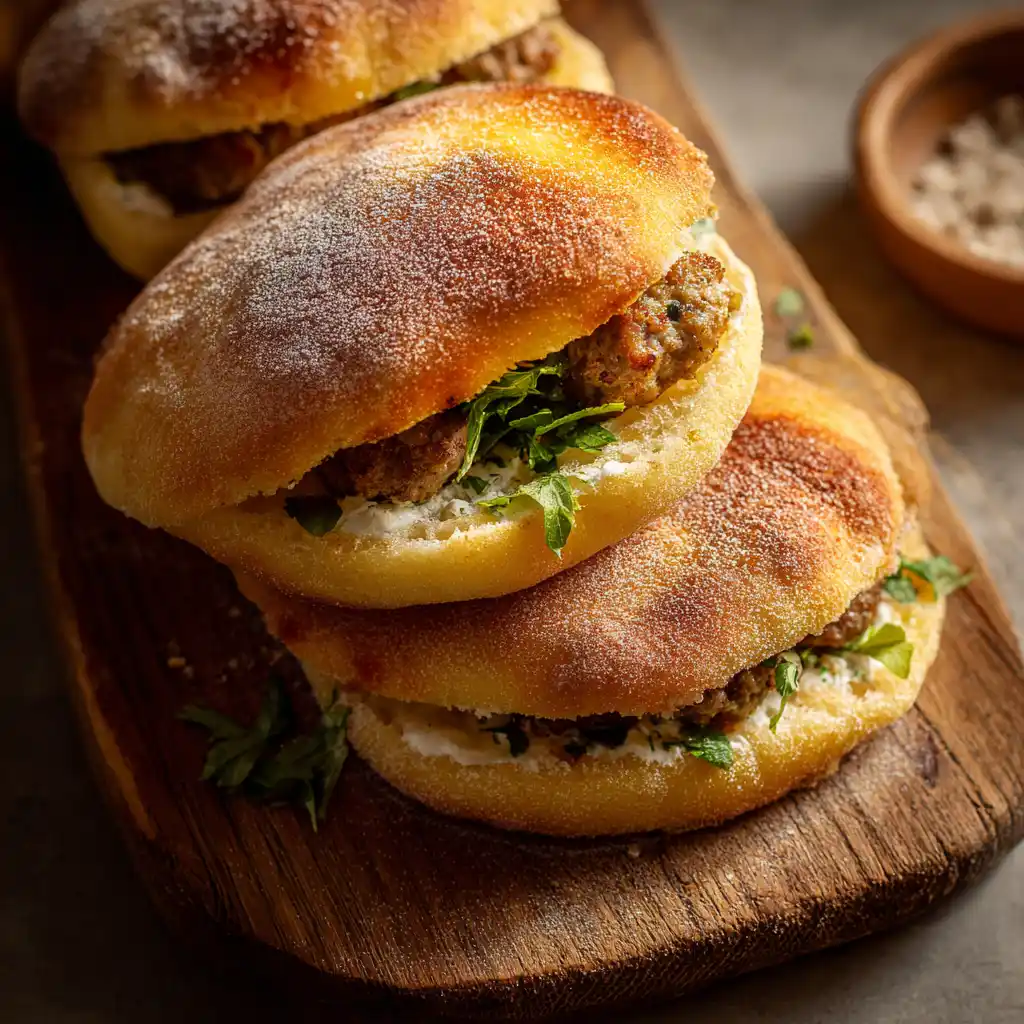
- As a sandwich base: Slice the bread open and stuff with spiced grilled meats, roasted vegetables, or falafel.
- With stews or soups: It’s excellent for dipping into hearty dishes like lentil soup, tagine, or bean chili.
- At breakfast: Warm it slightly and spread with butter, honey, or soft cheese for a comforting start to the day.
- As an appetizer: Cut into wedges and serve with hummus, baba ghanoush, or labneh.
This bread shines with simple pairings or bold fillings. Use it to scoop up dips like this rich high-protein buffalo chicken dip for a satisfying snack or game day platter.
When freshly made, this semolina bread has a warm, doughy aroma and perfect chew. Serve it warm to enjoy the full flavor and texture.

How to Store and Reheat
Short-term storage:
Once completely cooled, place the bread in an airtight container or zip-top bag. It will stay soft at room temperature for up to 2 days. Avoid storing it while still warm, as condensation can make it soggy.
To refrigerate:
Although not ideal (it can dry out), refrigerate only if needed. Wrap tightly in plastic or foil and place in a sealed bag. Use within 3–4 days.
Freezing instructions:
To freeze, layer parchment paper between each bread round and store in a freezer-safe bag. They’ll keep well for up to 2 months. Reheat directly from frozen in a warm pan or toaster oven until soft and heated through.
Reheating tips:
For best results, reheat in a dry skillet over low heat for 2–3 minutes per side. Avoid microwaving, which can make the texture rubbery. If the bread seems dry, wrap it in a damp paper towel before warming to restore softness.
Helpful Notes and Variations
Pro Tips for Perfect Semolina Bread Every Time
Mastering this semolina bread recipe is easy with a few thoughtful details in mind:
- Water temperature matters: Make sure your water is warm, not hot — ideally around 105°F. Too hot and it may kill the yeast; too cold and it won’t activate.
- Use fine semolina: Coarser semolina (like the kind for pasta) will make the dough gritty and dense. Look for “fine semolina” or “semolina flour” for the best results.
- Don’t skip the second rise: This short resting period after shaping allows the dough to relax and puff properly during cooking.
- Watch the pan heat: Medium heat works best. If it’s too high, the outside will burn before the inside cooks. Too low, and it won’t puff.
- Cover finished bread: Stack the warm discs under a clean towel to keep them soft and prevent drying out.
Each of these steps adds to the final result: a soft, puffy bread with just the right amount of chew.
Fun Variations to Try
Once you’re comfortable with the base recipe, semolina bread becomes a perfect canvas for flavor experiments. Here are a few ideas:
- Herb-scented: Add 1 tablespoon of dried herbs like oregano, thyme, or rosemary to the dough for a savory twist.
- Garlic and cheese: Mix in finely minced garlic and grated cheese for a melty, aromatic version. It pairs especially well with pasta dishes.
- Whole wheat blend: Swap ½ cup of the all-purpose flour with whole wheat for a deeper, nuttier flavor and added fiber.
- Stuffed version: Fill the discs before cooking with cooked onions, spiced ground meat, or soft cheese. Seal well and cook gently so the filling heats through.
- Mini versions: Make smaller discs and use them as sliders or appetizer bites.
Try stuffing the discs with caramelized onions or shredded chicken before cooking. You can also make a spiced version with turmeric or cumin added to the dough. These versions pair well with dishes like these sweet-and-savory honey garlic chicken thighs or other saucy proteins.
Conclusion
Semolina bread is one of those recipes that proves how simple ingredients can produce truly satisfying results. With its soft interior, golden exterior, and subtle flavor, this bread is perfect for dipping, wrapping, or just enjoying warm off the skillet. It’s quick to make, easy to store, and endlessly adaptable.
Whether you’re bringing a nostalgic favorite back to the table or trying it for the first time, this semolina bread recipe is a must-have in your kitchen. If you’ve tried it, leave a star rating and comment below, I’d love to hear what you paired it with or if you experimented with any fun fillings.
What’s your favorite way to serve semolina bread? Let’s chat in the comments, and don’t forget to share this recipe with friends on Pinterest or Facebook!
Frequently Asked Questions (FAQ)
Can I use only semolina and skip the all-purpose flour?
You can, but it will change the texture. Using only semolina can make the bread denser and more crumbly. The all-purpose flour adds elasticity, helping the dough stretch and puff better when cooked. A 2:1 ratio of semolina to flour keeps the bread light but flavorful.
How do I make this gluten-free?
Unfortunately, semolina is a type of wheat and naturally contains gluten. To make a gluten-free version, you’d need to substitute both semolina and all-purpose flour with a gluten-free blend. Keep in mind that the texture will be very different, and the bread might not puff as much.
Why didn’t my bread puff?
Several things could cause this:
The pan wasn’t hot enough.
The dough was rolled too thin or too thick.
The second rise was skipped or too short.
The dough was overworked and too tight to expand.
Make sure to follow each step closely, especi
Can I freeze semolina bread?
Yes! Let the bread cool completely, then store it with parchment between each round in a freezer-safe bag. It will keep for up to 2 months. Reheat directly from frozen in a skillet or toaster oven to revive the softness.